Luxor — expedition summary
Marsa Alam — expedition summary
1. DESCRIPTION
You have an occasion to experience one of the most unforgettable journeys in your life! This journey is tailor-made for you if you love combining a tourist holiday with an additional background, making it unusual. Simply, you are embarking on a fascinating experience of the longest total solar eclipse in the 21st century! In fact, the 2009 one was longer, but occurred at the ocean, about which you can read here. The total solar eclipse is the most wonderful event that nature can offer to us! Don’t miss it! Consider booking the journey, which combines travelling with science. The 2027 total solar eclipse offers one of the best viewing occasions because of the weather. The probability of clear skies in Egypt reaches 94%, which basically means that we don’t need to worry about it. We can conclude that the forthcoming 2027 total solar eclipse is the longest on the ground since 1991, until 2114!
In our offer, we picked two locations to consider. The first one is somewhere at the cliffs above the Mortuary temple of Hatshepsut, where the longest duration of totality — 6m22s will occur nearly above our heads.
The second location, as a good alternative, is the Red Sea coastline. The 6s shorter eclipse duration will be rewarded by the occasion of watching the unexplored terrestrial refraction phenomena as a result of fleeting umbra over the hot grounds. The desert’s features lead to significant temperature differences between day and night. It triggers interesting optical phenomena whose behaviour will be investigated during the eclipse.
Wherever we go, the primary goal of this observation is to study terrestrial refraction. Some observations regarding this have been performed in Poland at night. You can read about those here.
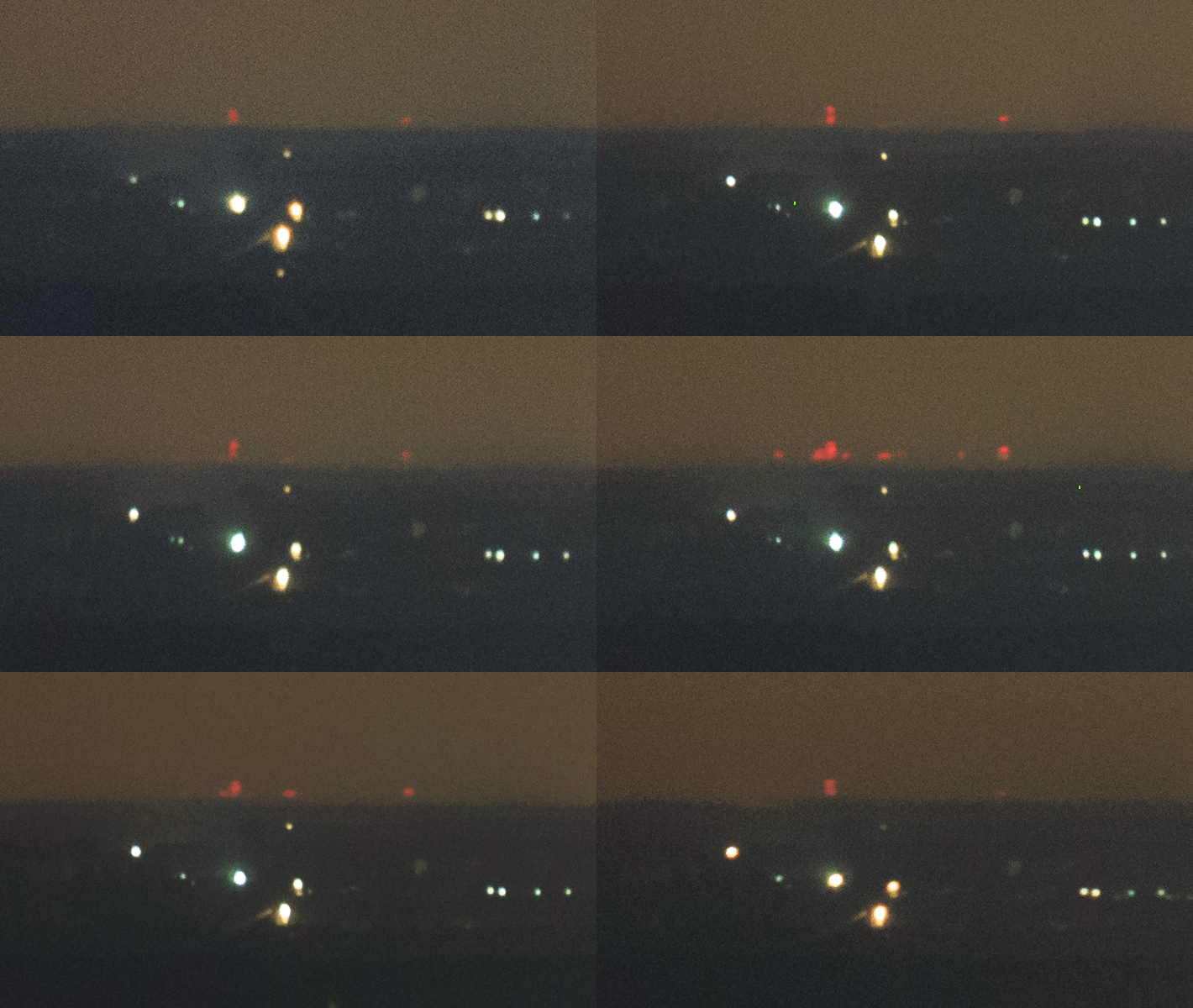
Moreover, the longest total solar eclipse, combined with desert conditions, is an ideal opportunity to monitor changes, particularly in the microclimate, including shifts in wind direction, adjustments in pressure systems, and, in particular, temperature differences. We can integrate a range of potential scientific approaches into our journey team, where everyone can find a fascinating field of study and be inspired by professionals. The total solar eclipse is not the only event we want to observe. Egypt is a country which can boast of an undeniably clear sky, free of light pollution. The low latitudes are favourable for observing the centre of the Milky Way, or even the Southern Cross if we go further south. The last thing is a good rest and some sightseeing, which can be done in the meantime.
2. PRICE
Price includes:
Price does not include:
— Visa (Single Entry Visa) — 45 USD
3. IMPORTANT INFORMATION
/VISAS/
Most travellers need a visa for Egypt. The visa options include:
-> E-Visa — applied online via the official portal before travel. It’s the most recommended option; youwill receive an email confirmation. There are two types of visa to obtain:
— Single Entry Visa — valid for 90 days, allows you to stay for 30 days in Egypt
— Multiple Entry Visa — valid for 6 months, allows you for multiple 30-day entries,
-> Visa on arrival — available at airports. You can purchase the Single Entry Visa only
-> Embassy/Consulate — apply in person
From our perspective, the Single Entry Visa will be necessary. The price for today (Dec, 2025) is 45 USD per person. The visa must be applied for at least 7 days before your travel! This is because the decision may be delayed or your application may be refused. In any case, there is no option to get your money back.
The chances of approval can be calculated individually on this page.
To apply, you need to upload a recent, clear passport-sized digital photo (35x45mm) with a white background, in addition to a scan of your passport’s information page, to complete your application online.
Moreover, everyone needs to have a biometric passport with:
— validity at least 6 months beyond your arrival date,
— at least one blank page reserved for stamps
— decent physical conditions, without missing or unreadable pages
/DRIVING BY CAR/
An International Driving Permit (IDP) is required in Egypt. It can be applied from both conventions (1968 — Geneva, 1968 — Vienna). Along with it, your national driving license is mandatory!
Unfortunately, driving across Egypt is difficult. This is because there are no serious driving license courses. People learn to drive from their parents or older siblings. After a 3-day driving course, they take a theoretical and practical exam, which is a joke. In turn, the driving is chaotic and unregulated. The primary rule is to watch ahead, as you are responsible for what happens in front of your car. It’s advisable to adapt to local informal driving rules, which can be difficult for tourists. In addition to driving cars, many Egyptians ride motorcycles, which are often family-run vehicles.
Additionally, they don’t need a driver’s license to operate it. Finally, it makes roads very congested and difficult to drive in urban areas.
The driving regulations in Egypt are rather theoretical. It’s a right-hand traffic, and you can drive up to 90km/h in an open area. However, you need to pay strict attention to:
-> The traffic lights are often ignored — even if you are waiting at a red light, other drivers will use the horn at you.
-> The driver responsible for a potential car accident is always behind you, regardless of the manoeuvre.
-> Pedestrians cross the street in series, once they have an opportunity between fast-moving cars. Nobody cares about traffic lights.
-> People tend to be first everywhere, so they often use the horn for others and try to break into the traffic,
-> Many drivers don’t turn on their lights at night! They are convinced that the lights are too dazzling, so it’s better to drive in the darkness!
-> Sometimes, we can see drivers moving in opposite directions! Especially where the turn-around junctions are too rare.
-> Outside of urban areas, driving is peaceful
There are other things to look at:
-> Lack of petrol stations, as they’re located only in urban areas
-> Cars are usually in poor technical conditions, and there are not many repair stations
-> Random road quality. There are good dual-carriage ways between the airports and cities, and decent roads in desert areas, but in other cases, roads are of poor quality.
-> Because of regular military checkpoints, there are road closures in places (desert areas),
-> Lots of signage is in Arabic only.
At the end, it is worth noting the age limits for hiring a car. The minimum age is 23, while people aged 60+ may also have trouble hiring a car.
We can also rent a bus instead of a car.
Learn more:
/PUBLIC TRANSPORT/
Egypt has quite robust inter-city bus connections. Buses operate regularly at high (luxury) standards. Tickets can be purchased from the driver, and they’re usually cheaper than the cost of your journey.
Instead of characterizing the quality of a typical bus journey, what is noteworthy is that the major coach operators in the country are. A list of them can be found below:
-> GoBus
-> SuperJet
-> BlueBus
Coaches are sometimes overcrowded, so they can arrive late.
When a shorter journey is needed within a region, minibuses are more useful because they often make multiple stops, underscoring their flexibility. Usually they cost for a song, so it’s nothing to worry about. The same applies to taxis. The most useful taxi app is Uber, but other popular ones are available in some regions. As far as Luxor is concerned, we can use Careem and InDrive as ride-hailing apps. The best option remains Uber, with reasonable, fixed prices, whereas InDrive requires more negotiation. In many cases, taxi fares are negotiable, and prices are reasonable even for longer journeys. Given the eclipse circumstances, we must be aware of potential taxi shortages, so this mode of transport shouldn’t be considered for our observation venue.
The last type of transport is the train. The railway network in Egypt isn’t extensive; however, the major cities along the Nile River are connected. The leading operator is Egyptian National Railways, which includes sleeper services provided by Abela Trains (formerly Watania Sleeping Trains). All tickets are bookable online, and seats can be reserved up to 7 days in advance. Most of the trains are air-conditioned.
Like everywhere, there are several important notes to mention when using public transportation in Egypt:
-> Avoid crowded buses and microbuses when possible, because the crowd increases the probability of pickpocketing,
-> Negotiate the taxi prices as much as possible. Since they know you are a tourist, they try to increase their services as much as possible,
-> Avoid microbuses without licenses, because you might fall beyond the scope of your insurance after some accidents, etc.
-> Remember about rush hours in cities, when all the transportation is busy and doesn’t operate on time,
-> Make sure you have coins or a little money to pay for your ride, drivers usually don’t have change
Learn more:
/ESCOURTED JOURNEYS/
If we plan to travel alone, it’s advisable to work with an accredited tour operator from the Egyptian Travel Agents Association. In our situation, the best choice appears to be Luxor Tours, which operates in the Aswan region. Alternatively, we can decide on MemphisTours services in the Hurghada region and assist with our final eclipse journey south of Marsa Alam. There is not only one travel agency operating in those regions. Some others can be found below:
LUXOR:
MARSA ALAM:
Cleopatra Travel (Nile Cruisers)
TopClassEgyptTravel (main page)
There are many more on this list, although the vast majority don’t have websites and sometimes even no email addresses, which underpins their credibility.
/POLISH TRAVEL AGENCIES IN EGYPT/
From the perspective of Polish attendants, we can consider the language-oriented tour operators that specialize in serving Polish groups. They’re located mostly in the Hurghada region:
https://wycieczki-hurghada.pl/
https://www.czwartapiramida.pl/
https://dziendobryegipt.pl/
https://www.elsaheltravel.pl/
https://hurghadawycieczki.pl/
/NAVIGATION/
-> Maps.me — the best, when you drive a car
-> Google Maps — good, but don’t rely on the information about public transport
-> Mapy.cz is useful in outdoor areas and can be helpful when looking for an eclipse observation venue. They don’t work offline unless the subscription is paid. Alternatively, you can download only one region offline, which isn’t useful enough for longer journeys.
-> Locus maps — the best for outdoor and transport use. Free for basic options. Work well offline with map tiles downloaded upfront.
/INSURANCE/
Tourist insurance is mandatory in Egypt! It should cover treatment, medical transport, and hospitalisation costs in the case of an emergency. Some companies question certain treatment costs, so it’s highly advisable to avoid the cheapest, basic offers. It’s advisable to purchase the offer that includes multiple services, including the effect of passive participation in acts of terror. It is important to consider the insurance policy when choosing which tourist attractions to visit. Some of them might not cover water sports, quad riding, etc.
Hospitalisation is very expensive in Egypt. If you are involved in an accident, please contact your insurer, regardless of the time of day, before going to the doctor or hospital. You need to discuss all the treatment costs with your insurer to prevent rejection.
/POTENTIAL ON-SITE COLLABORATION/
Given the expedition’s specificity, we will seek to collaborate with astronomy- and science-oriented associations operating in the country. There is a well-established Egyptian Society of Astronomy, which is worth contacting not only regarding the eclipse event but also for guided stargazing tours in the southern part of the country. The Sahara region is free of light pollution. There is also the National Research Institute of Astronomy and Geophysics (NRIAG), with which we could collaborate regarding the scientific background of our eclipse project.
4. PRACTICAL INFORMATION
/CUSTOMS/
The Egyptian customs regulations are quite similar to those in Europe. There is some important information listed below:
-> Custom service must approve subsidized medicine from your country
-> The maximum allowed for foreign exchange is 10000 USD; above this number, the custom declaration is required
-> The maximum allowed cash to take out of the country is equivalent to 10000USD or 5000EGP
-> You are not allowed to import anything from the list of prohibited items
/ASTRONOMICAL & ELECTRONIC DEVICES/
Transporting professional electronic devices in Egypt can be problematic. The list of prohibited items includes drones. They’re strictly forbidden in this country, unless you have a permit from the proper authorities obtained prior to your arrival. We can try in the Egyptian Civil Aviation Authority (info@civilaviation.gov.eg / +202 202-22677613). Unfortunately, the chances are slim, as most permissions are granted to Egyptian nationals working in the tourism industry. If you decide to bring a drone with you, even under the best circumstances, your device will be confiscated at the border crossing. It does apply for any type of drone! In the worst-case scenario, you can face enormous penalties or even imprisonment! Better leave your drone at home! Don’t think that you will eventually leave your drone at the customs point and get it back at your departure.
The list of prohibited items also includes «Any unusual electronic devices». This point doesn’t specify them directly, but we can infer what types of devices they could be. In our case, it can definitely be a set of advanced optical accessories, including telephoto lenses, binoculars, and telescopes. Egyptian authorities might be unpredictable! Officially, DSLR cameras with interchangeable lenses or compact digital cameras aren’t banned, but in practice, customs can confiscate them in certain situations when they deem them too professional, as with tripods, microphones, stabilizers, etc. We should also avoid bringing brand-new, unpacked devices, as customs officers may suspect you intend to resell them. It may result in unforeseen customs duties or a temporary deposit until we complete our trip. Equipment must be reported before our journey or at the border crossing. It’s advisable to have proof of purchase (a bill) to show customs officers that it’s for personal use. We might be asked about the purpose of using our accessories in the country! In conclusion, to keep our journey as simple as possible, we should limit our observational set to minimize potential issues with unanticipated controls. Moreover, we can flag at the border that we are photographers and travellers, and that we won’t use any devices for commercial purposes. Despite the law limiting electronic devices to one person, we can follow the principle that less is better.
/CAR HIRING & TRAVELLING/
Except of valid driving license and an International Driving Permit (IDP) mentioned above, you would need the following items to make your hiring successful:
-> Passport, which must be kept handy for any road checkpoints,
-> Tourist visa
-> Credit card — must be in the lead driver’s name for the security deposit. Many local companies are strict about not accepting debit cards for deposits.
-> Many car rental companies require a minimum age of 25. If you are between 21 and 25, you are subject to a daily surcharge of 10-25 USD.
-> One-way rentals are possible, but only within the country. International one-way rentals are not permitted.
Besides, make sure what type of petrol your car takes. Keep your tank topped-up in full for some long-haul desert journeys
When renting a car in Egypt:
-> Insist on a full-to-full policy — Check the gauge before you leave; if it’s not full, have them note it on the contract.
-> Always take a picture of your car when hiring it. Images should show both the exterior and interior of the vehicle. Alternatively, you can do a video walkaround. Focus on wheels, bumpers, and windshields. Minor scratches are very common in Egypt. Make sure your video or pictures are detailed enough.
->Verify emergency contacts: ensure you have a direct number for the local office. In the event of a breakdown or a minor accident, you must call them immediately before moving the car or signing any police reports.
When driving by car in Egypt:
-> Have some minor cash for tolls, which are popular on Egyptian motorways. Not all of the respect cards so far.
-> Respect the road checkpoints — If you see a police checkpoint (common on highways to Sinai or Luxor), slow down, turn off your high beams, and turn on the interior light at night so officers can see you. Have your passport and rental papers ready,
-> Be prepared for the «Parking assistant culture» — there are «Sayess» (informal parking attendants) in cities, who can help you to find a parking place. Don’t forget to give them some money (10-20EGP) when you return,
-> Avoid night driving — Outside of well-lit city centres, avoid driving at night. Some trucks drive without headlights, and camels or unlit carts can appear suddenly on desert roads.
-> Use horn as a signal — Use your horn briefly to signal that you are passing someone or to let a pedestrian know you are there. It’s not aggressive; it’s communication.
-> Stick to speed limits — 60km/h in urban areas, 90km/h on open rural roads, 120km/h on motorways.
When parking your car in Egypt:
-> Always park on the right side of the road, facing the direction of the traffic flow (directional parking),
-> Don’t park in prohibited zones, which cover, i.e. hydrants, sidewalks, driveways, etc.
-> Use parking meters wherever possible; they’re integrated with the parking apps. One of them is, for example, OneParkEgypt, Parkonic Egypt,
Example penalties for drivers:
-> Speeding — 2,000 EGP to 10,000 EGP
-> Wrong way driving — 2,000 EGP to 10,000 EGP
-> Road pollution (throwing waste, excessive noise, harmful smoke emissions) — 5,000 EGP to 15,000 EGP
-> Illegal parking — up to 500EGP
-> Illegal road blocking — up to 1000EGP
When returning your car in Egypt:
-> Refuel near drop-off — If you have a «full-to-full» policy, keep your final gas receipt as proof of the refuelling time and location.
-> Make the final inspection — Ensure a staff member inspects the car in your presence. Do not just leave the keys in a drop box unless it’s an emergency.
-> Get a «Close-out» document — ensure they provide a signed document or an email confirming the car was returned in good condition.
Learn more:
/CAR INSURANCE/
Because of the awkward specificity of road traffic in Egypt, car insurance is definitely required! The types of car insurance can be found below:
-> Collision Damage Waiver — Standard in most rentals, but usually comes with a high «excess». It usually covers Damage to the rental vehicle’s bodywork. Most basic CDW policies have an excess ranging from $500 to $2,000. If you, for example, scratch the door, you pay up to that amount; the insurance covers the rest. It usually costs between $10 and $30 per day. It often excludes the «vulnerable» parts of the car: tires, windshield, mirrors, and the undercarriage (which is easily damaged on Egypt’s high-speed bumps).
—> Theft Protection (TP) — It covers you from costs when your vehicle is stolen. The price of this kind of protection ranges from 10 to 90 USD per week, depending on what we want to cover: the car only or our transported equipment as well.
-> Third Party Liability (TPL) — this kind of insurance covers you from damage to other people’s property or injuries. The price depends on the engine capacity of your rented car, and its maximum cap reaches 100000EGP.
-> Super Collision Damage Waiver (SCDW) is a high-tier insurance policy recommended for car hire in Egypt as an extension of the basic insurance offered by car rental offices. This type of insurance minimizes the car owner’s liability. For a one-week rental, you should expect to pay between $105 and $245 for the SCDW alone, on top of the base rental price.
For the successful application of your insurance, you always need the «Police report rule» (Mahdar). It’s mandatory to prepare after a car accident, etc.
/HEALTH/
It’s highly advisable to visit your «first contact» doctor at least 8-6 weeks before your trip in order to arrange relevant vaccinations, which are for:
-> Hepatitis A — which we can get by contact with, i.e. dirty food,
-> Hepatitis B — possible to get when we are wounded and have direct contact with infected blood,
-> Crimean-Congo hemorrhagic fever (CCHF) — which is a severe, often fatal viral disease transmitted to humans by Hyalomma ticks or contact with infected blood/tissues from livestock. Imported to Egypt along with camels,
-> Dengue — Dengue is a viral infection transmitted by Aedes mosquitoes (primarily Aedes aegypti) and is common in tropical and subtropical regions. It causes symptoms such as high fever, severe headache, muscle/joint pain, and rash.
-> Rabies — a high-risk disease in Egypt, which you can contract through contact with animals,
-> Typhoid — transmitted via contaminated food and water,
-> Polio disease — last infection reported in 2004, recommended vaccination when travelling with children,
-> Meningococcal diseases — highly dangerous because they can cause death or permanent disability within 24 hours of symptom onset
Most tourist resorts have a resident doctor providing 24/7 service. These doctors are convenient but oftenovercharge for their services. Public clinics are not recommended because treatment quality is typically poor. Moreover, some clinics may require an upfront cash deposit before treatment begins. As an alternative, we can recommend English-speaking doctors nationwide who are more cost-effective and provide a high standard of care. Always request a receipt to claim under your travel insurance. Standard private hospital rates range from $100 to $250 per day.
Bringing your own medicine is generally permitted as long as utilised only for personal use, but some types of medicine are restricted. Prohibited or heavily restricted items include Methadone, Tramadol, Codeine, Alprazolam (Xanax), Diazepam (Valium), and certain stimulants. Travellers must carry medications in their original packaging, along with a doctor’s letter, for personal use. In extreme cases, permission from Egypt’s Ministry of Health is required prior to your arrival.
Prescription medicines for travel to Egypt should be kept in their original, clearly labelled packaging and placed in a transparent plastic bag in your hand luggage for easy inspection.
Typical disease caused by different bacterial flora is called the «Pharaoh’s revenge», which is a type of traveller’s diarrhea. Symptoms include loose stools, stomach cramps, nausea, and fever. It typically lasts 3-4 days, with treatment focused on hydration. The primary causes of this disease are drinking contaminated water, eating fresh fruit, and consuming raw food. Be careful of West Nile Virus (WNV) caused by ongoing circulation in mosquitoes, birds, and animals (especially horses and camels) and reported in the Nile Delta and Valley.
Drink only bottled water!
More information:
1 2 3 4 5 6 7 8
/DANGEROUS ANIMALS/

The list of the most dangerous animals, which can seriously disrupt your journey, can be found below:
-> Scorpion (Deathstalker/Leiurus quinquestriatus) — active at night in desert areas, one of the most dangerous types of scorpion when hunting. Can kill elderly persons or children.
-> Arabian fat-tailed scorpion (Androctonus crassicauda) — extremely dangerous scorpion, which can kill you within an hour,
-> Nile Crocodile (Crocodilus Nilotcus) — extremely dangerous and considered one of the deadliest reptiles, responsible for hundreds of human deaths annually in Africa, more than any other crocodilian species, due to their aggressive nature and frequent proximity to human populations near water sources where people fish, wash, or gather water. They are powerful predators that actively hunt, with fatal attacks occurring in or near water, making activities like swimming or cleaning at the water’s edge hazardous.
-> Egyptian Cobra (Naja haje) — escapes into bushes when threatened, but in general, it is the most dangerous snake in North Africa; bites to humans are potentially lethal.
-> Saw-Scaled Viper (Echis) — Lives in dry desert and rocky areas; it bites frequently, resulting in more deaths than other snakes with more deadly bites. Even those who survive the saw-scaled viper’s venom don’t always make it out unscathed.
-> Saharan Horned Viper (Cerastes cerastes) — Severe local swelling, intense pain, nausea, vomiting, and bruising (ecchymosis). Eventually, the bite is lethal for humans.
-> 44 sharks live in the Red Sea — confirmed attacks on humans in Hurghada & Marsa Alam areas.
-> Stonefish (Synanceia) — popular in Hurghada & Sharm el Sheikh regions. It’s the world’s most venomous fish. which stings are potentially fatal, capable of causing human death within an hour due to intense venom, which leads to paralysis, cardiac arrest, and respiratory failure.
-> Lionfish (Pterois miles) — The Red Sea is one of their native region. Its stings are rarely fatal to healthy humans, as the venom is generally not lethal, though it causes intense pain, swelling, and, in rare cases, systemic issues like dizziness, fever, and breathing difficulties
There are simple safety tips to consider during your journey:
-> Avoid swimming in the Nile, especially south of Luxor,
-> Do not swim or snorkel alone in the Red Sea and avoid areas where sharks are known to hunt,
-> Wear shoes in the desert to protect against snakes and scorpions.
/EXTREMELY HOT WEATHER/
July & August are the hottest months in Egypt. The temperature changes from around 30 degrees Celsius to over 45 degrees Celsius during the day. At the Red Sea coast, the temperatures are a tad milder. Around the Luxor area and in central Egypt, we can also expect sandstorms, which will not improve eclipse observations or visibility.
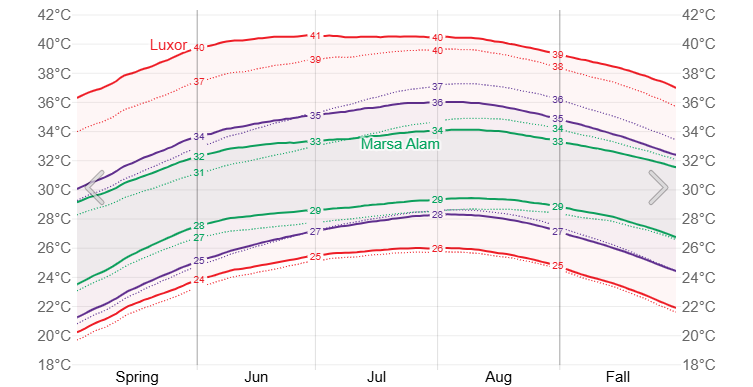
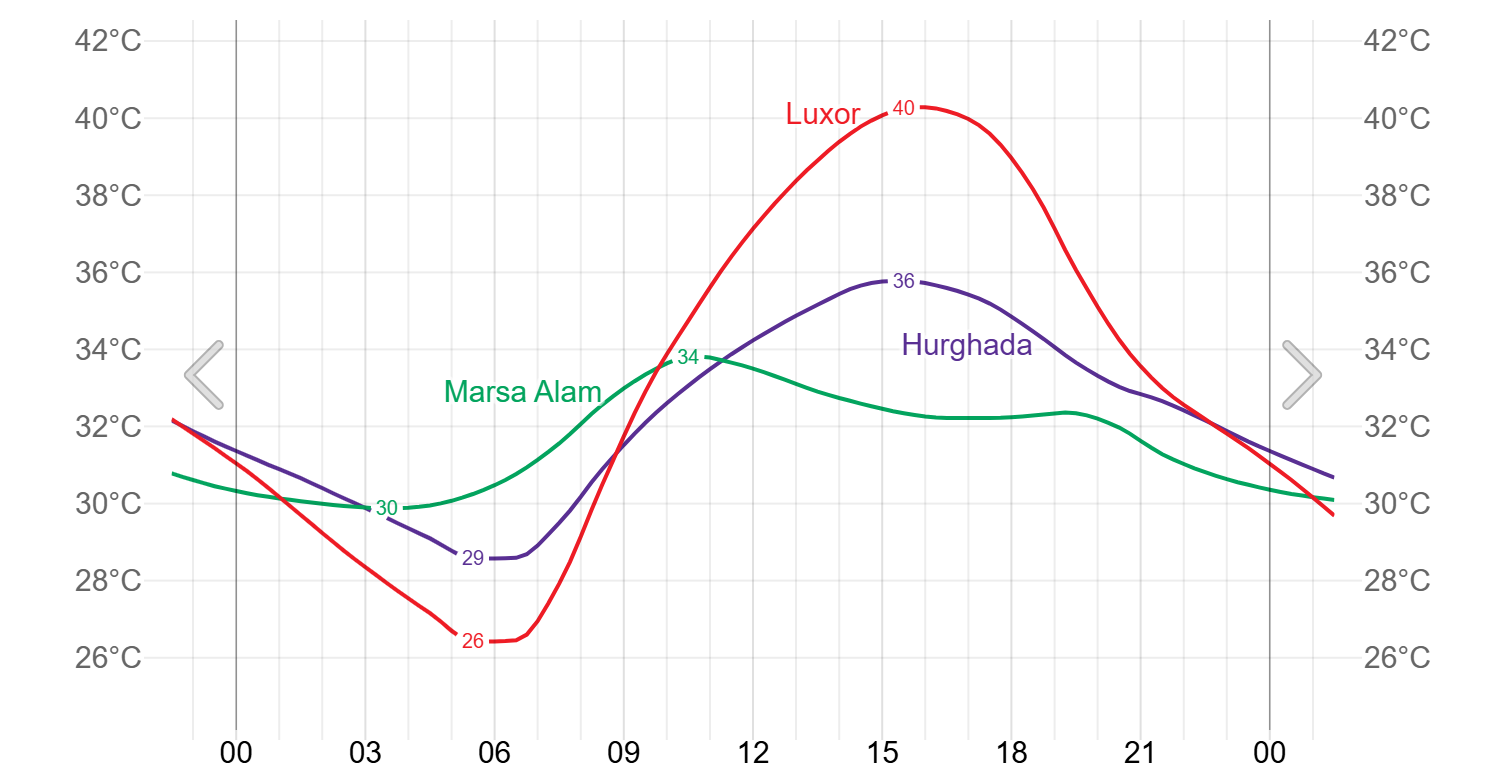
Key safety tips for hot weather:
-> Prioritize high-volume water consumption,
-> Limit direct sun exposure during peak hours, typically 10 a.m. or 11 a.m. to 4 p.m.
-> Wear light-colored cotton clothing and a hat
-> Take a wet wipe
-> Use SPF 50+ sunscreen, as the sun is intense
/LUGGAGE/
In the case of bag theft, you always need to fill out the Property Irregularity Report (PIR), where you need to provide detailed information about your bag, its contents, and your contact details. After that, you should receive a PIR code (e.g., CAIAR12345) to track your luggage online. When your bag is missing after the flight, you have certain rights to discover why your bag is delayed or missing under the Montreal Convention, and claim the compensation later on.
/OTHERS/
-> Money — Since credit cards are widely accepted at hotels, upscale restaurants, and tourist attractions, it’s better to have cash for small shops, taxis, and local markets (souks). Most businesses, restaurants and retailers accept debit cards, Visa, and MasterCard. When you lose your card, you have to restrict it ASAP!
-> 1 EGP = 0,021 USD (30.01.2026). Check real-time rates.
-> The emergency number in Egypt is 112, usually served in English. It’s good to ask for assistance in the hotel if we have any problems. Other numbers:
Ambulance 123; Fire 180; Police 122; Tourist police 126
-> Power sockets used in Egypt are F and C (Europlug). Supply voltage is 220V.
-> Best mobile operators in Egypt are Vodafone and WE Telecom, which offer the most extensive 4G coverage.