Expedition summary
1. DESCRIPTION
You have an unforgettable chance to experience the most unique twilight ever. This is because of the 2026 total solar eclipse geometry, as the totality ends at the Mediterranean Sea east of the Balearic Islands. This is a once-in-a-lifetime occasion to see how the twilight changes under the strong influence of the Moon’s shadow.
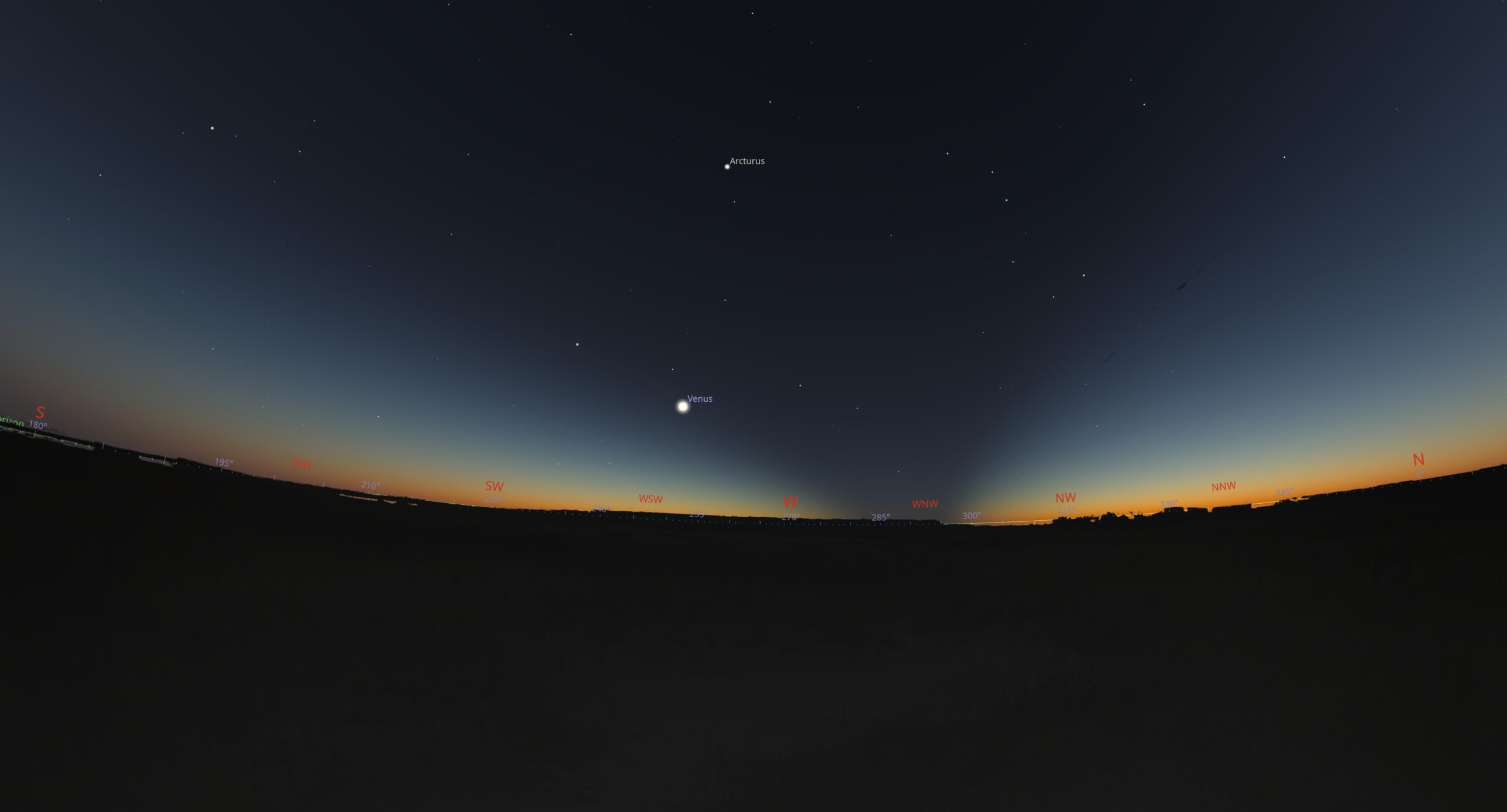
The core approach of this observation is documentation of umbra movement from the stratosphere! This is the very first observation in the world, which is aimed at studying behaviour of the Moon’s shadow cone when leaving the Earth’s surface and then atmosphere in order to understand the influence of solar eclipse on ionosphere in wider sense.
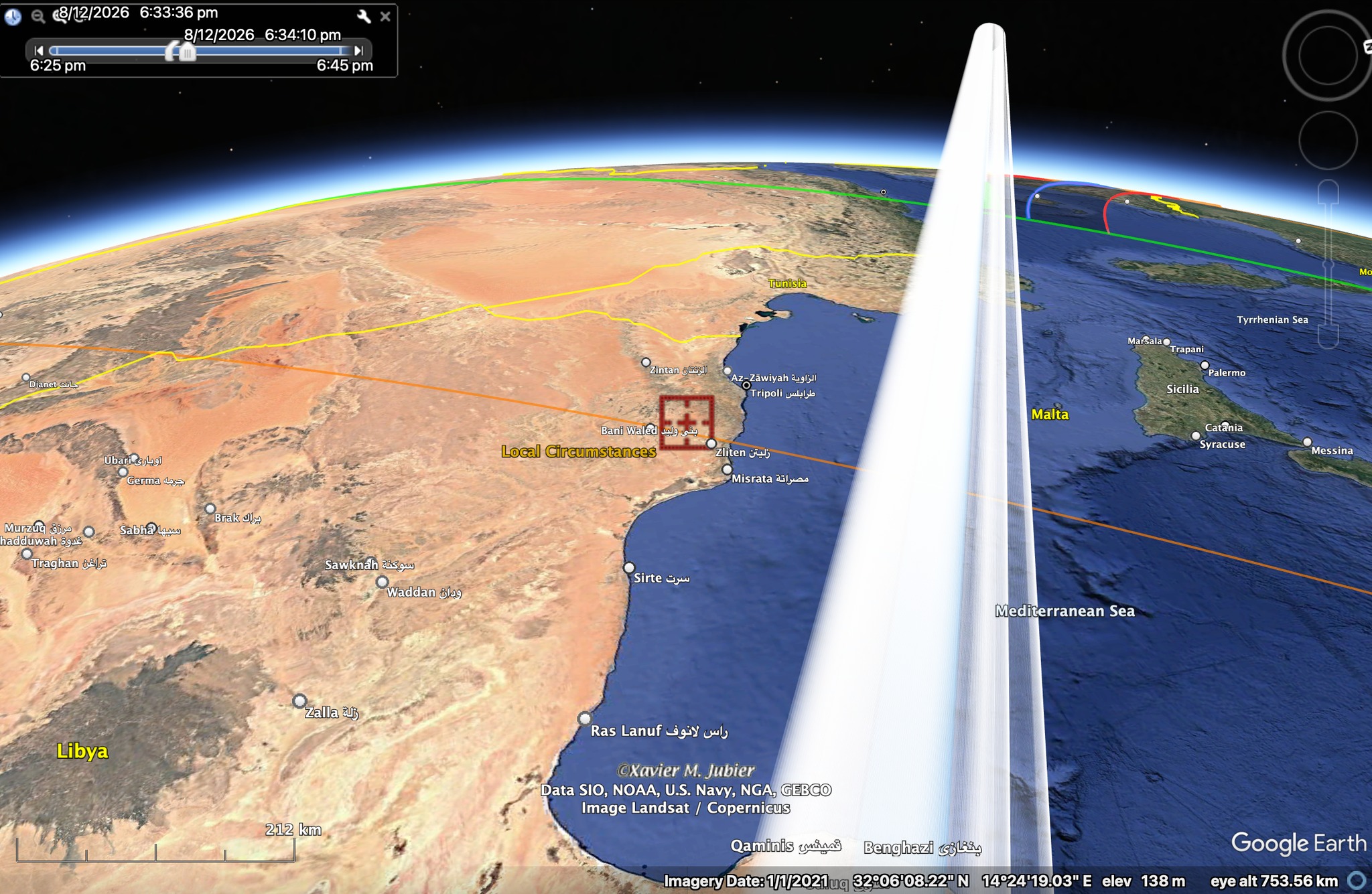
More information about this unique project you can find here.
The list of things to be investigated from the altitude of 30-32km is not specified just yet. The scope of study from the ground is known p[retty much, as it will cover the visual changes of the sky scene, umbra colour assymmetry and sky surface brightness measurmeents by using the SQM-LU-DL device. It’s simply repetition of the scientific approach from Spain in 2024, which now is going to be performed within civil dusk conditions.
2. PRICE
3. IMPORTANT INFORMATION
/VISAS & PROOF OF ACCOMMODATION/
Many nationalities (including the UK and Poland) don’t require a visa to travel to Tunisia for up to 90 days. They need a passport that is valid at least 3 months beyond your departure date, or at least 6 months beyond your departure date if you don’t have a return ticket. Your passport should have at least one blank page for stamps. You cannot enter Tunisia with an ID card after January 1, 2025!
Tunisia requires proof of accommodation, so customs control (immigration upon entry) may ask for a paid hotel reservation and its duration for the duration of your journey. It’s advisable to have them printed or digital along with your return ticket. If you’re staying with someone, a signed invitation letter from your host might be required. It may apply to Airbnb bookings, although the immigration office typically accepts these confirmations.
/DRIVING LICENSE & TRAVELLING/
Driving in Tunisia by car can be a good option, though we should be aware that drivers often do not adhere to traffic rules. Driving in Tunisia requires an International Driving Permit (IDP) issued under the 1968 Convention, and we must drive on the right. Unfortunately, local drivers may not comply with this rule, especially in congested urban areas. Drivers tend to zigzag through traffic, realistically influencing shared road space. Sometimes local drivers ignore red lights and pedestrian crossings. Drivers drive nervously and use their horns quite often.
It’s not advisable to drive at night due to poor visibility and poor driver behaviour.
The road quality is generally good; highways are paved, but they cost a song. Pay machines are located at the entrance gates, as in many European countries. Local roads are predominantly in poor condition. Some mountainous and desert areas can be closed to the public for military purposes.
A few good pieces of advice before you decide to discover Tunisia by car:
-> Keep driving with a flow,
-> Make yourself visible,
-> Pay strong attention to pedestrians, who don’t cross roads in dedicated places (zebras, pedestrian crossings, etc.) but can trespass on the road in any place. It happens even on motorways!
-> Be prepared for an occasional security check by the police or military. Stop and show them your documents. Be obedient to any of their commands.
-> If you want to park, look at the curb colour (blue and white—parking is allowed; red and white—not allowed).
-> Most drivers don’t use their indicators properly
Additionally:
-> Make sure that the car you are going to rent is in good condition
-> Make sure the car you are going to rent is well equipped (air conditioning, etc.).
Learn more:
/PUBLIC TRANSPORT/
The primary modes of public transport in Tunisia are buses, trains, and shared taxis, known as lounges. In general, public transportation is cheap.
The main bus coach company across the country is Société nationale de transport interurbain (SNTRI,), which offers a very straightforward search for connections in French. Coach density is good, especially in the largest tourist and administrative areas and occasionally between smaller towns and villages. The coaches are generally new; you can learn more at the Ministry of Transport (French), air-conditioned and punctual.
In addition to being the only national coach transport provider, Tunisia has 16 regional operators. It’s usually hard to navigate timetables, except in the largest cities, where everything is clearly posted at the bus stations. Usually, the regional coaches are poor in quality, which can be tiring during the summer. In general, the bus is the easiest way to travel between towns in Tunisia, but if we choose local transport, we may be frustrated by frequent stops that can double our journey time.
Tunisia has an extensive rail network. Trains are inexpensive, but unfortunately unreliable. Long-distance trains are slow and poorly maintained, with frequent delays, yet they remain a viable alternative in public transport. Some of these are air-conditioned, which is important during the summer. The journey can be booked on the main Société Nationale des Chemins de Fer Tunisiens (SNCFT) website. It’s advisable to travel in 1st class, as it is better maintained and less crowded. Tickets can be purchased both online and at the station. A dedicated mobile app, available in French and English, allows tourists to do so. It’s vital to book your journey, ideally a day or two in advance. The indirect platforms from which your train ticket can be purchased are:
-> 12Go
-> Bookaway.com
Seat allocations on the trains aren’t restricted, but it’s best to arrive as early as possible.
The third major mode of transport across the country is Louages—the shared taxis or minivans that depart when they are full. This is a type of on-demand transportation that operates in any area across the country and appears to be the most efficient, taking you directly to your destination without additional stops. They depart sometimes, even every 15 minutes.
There are 3 kinds of louages in Tunisia:
-> red-stripped — they travel between major cities,
-> blue-stripped — they travel between large cities and small towns,
-> yellow-stripped — they travel within the least populated areas and small towns strictly
Usually, travelling in a louage isn’t comfortable, as all passengers are cramped, and some drivers’ driving habits can be risky. There is no air conditioning inside at all. The night tariff is approximately 50% higher. It’s advisable to discuss the travel costs before we proceed. The taximeter should always be in operation!
Focusing on local transport in the most popular urban areas, we can consider the Sahel Metro, which could save us significant time. It’s a practical way to travel between coastal places. The schedule can be found here. Between Tunis and La Marsa in the north, there is a dedicated TGM line that provides additional regular service.
When you are planning to visit Tunis, you can use the 6 tramway routes (Tunis Light Metro).
Learn more:
/ESCOURTED JOURNEYS/
In general, there are many local tour operators in Tunisia. For their genuineness, please refer to this link, which ranks the 15 best from the most recent season. Sightseeing in Tunisia is rather safe; for special requirements, we can arrange a local guide for the most interesting spots. Due to the eclipse, our primary accommodation will be in Sfax. As detailed in the journey plan below, local tour guide or tour operator services can be arranged from various locations.
Potential local touroperators:
-> TravelAzeTours
-> TunisiaTravel
-> Koufa Travel Agency
There are some websites where we can get these services from:
-> TripAdvisor
-> GetYourGuide
-> ToursByLocals
-> TourHQ
The price of all escorted journeys is set by the government, so there are no significant price differences between tour operators. In practice, the low fare indicates that something is missing from our planet trip.
One of the most popular types of escorted journeys is a 4×4 desert trip. Because the Sahara, along with the mountainous areas (Orbata, Selloum, Semema, Chambi, and Mghila), can be dangerous, we recommend taking the escorted trip with this exemplary tour operator.
/NAVIGATION/
-> Maps.me — the best, when you drive a car
-> Google Maps — good, but don’t rely on the information about public transport
-> Mapy.com is useful in outdoor areas and can be helpful when looking for an eclipse observation venue. They don’t work offline unless the subscription is paid. Alternatively, you can download only one region offline, which isn’t useful enough for longer journeys.
-> Locus maps — the best for outdoors and transport. Free for basic options. Work well offline with map tiles downloaded upfront.
/INSURANCE/
Health insurance is mandatory in Tunisia. The insurance offered by the travel agency must always be checked. European Health Insurance Card (EHIC) is not supported! For chronic diseases, additional insurance coverage is required. Hospitalization and doctor appointments are quite expensive. Public health services aren’t recommended due to their poor quality. You might not be able to leave the hospital if you don’t pay for your treatment. It’s advisable to include high-risk sports coverage in your insurance policy. Everything mentioned here exceeds the standard reasons for being insured, such as losing your luggage or holiday cancellations.
/POTENTIAL ON-SITE COLLABORATION/
Given the expedition’s specificity, we will seek to collaborate with astronomy- and science-oriented associations operating in the country. The Astronomical Society of Tunisia is well established and worth contacting not only for the eclipse event but also for guided stargazing tours in the southern part of the country. The Sahara region is free of light pollution. Moreover, Université Virtuelle de Tunis (UVT) collaborates with IAU. It’s not the only unit that deals with astronomy. There is also the National Institute of Meteorology, which conducts projects in the Geophysics and Astronomy department. Next, the Faculty of Science at the University of Tunis El Manar and any other units or organizations available across the country.
4. PRACTICAL INFORMATION
/CUSTOMS/
The amount of money exceeding 5900 EUR must be declared upon arrival. A customs declaration may also be advisable when we are unsure about spending money in the country. A declaration isn’t required to take out of the country a sum of money not exceeding 1450 EUR. The customs officers will meticulously check your luggage and money. This is because you cannot take Tunisian dinars out of the country! Otherwise, you will be fined or even imprisoned. The customs declaration form can be completed online prior to your arrival. Every time our currency is exchanged into Tunisian Dinars, we must obtain proof of the exchange (Receipt, invoice, etc.). Receipts from the cash machine aren’t accepted! You need to have a receipt from your bank. We will need this document to exchange Tunisian Dinars back to our currency upon departure. The money exchanges operate 24/7 at the airports, so we won’t have any issues. You can read more on the main customs service website.
/ASTRONOMICAL & ELECTRONIC DEVICES/
Drones are under very strict regulations. Bringing drones without permission will result in the immediate confiscation of your device by customs. Confiscated drones are rarely recovered, and you may face severe penalties, including heavy fines or, in extreme cases, imprisonment. You need to obtain the relevant permission, which is almost impossible. Your first point of contact should be the Ministry of National Defence and Direction Générale de l’Aviation Civile (DGAC). Tunisian customs officials are known to be vigilant. If a drone is found in your luggage upon arrival, it will be seized and held at the airport, often requiring you to retrieve it only when leaving the country.
For typical photography equipment, tourists must register GoPro cameras and telephoto lenses by completing a declaration upon arrival. Photographic equipment for personal use is usually allowed without issue, like laptops, but it must be in your hand luggage.
Learn more:
/CAR HIRING & TRAVELLING/
Except of valid driving license and an International Driving Permit (IDP) mentioned above, you would need the following items to make your hiring successful:
-> Passport, which must be kept handy for occasional road controls,
-> Confirmation of your online reservation,
-> «Good» credit card — they recommend the Sapphire credit card, but both Visa and Mastercard, as well as American Express, are widely accepted,
-> Many car rental companies require a minimum age of 21. The driver’s license must be held by the owner for at least 1 year.
When renting a car in Tunisia:
-> Insist on a full-to-full policy — Check the gauge before you leave; if it’s not full, have them note it on the contract. The Full-to-empty policy means much higher payment for petrol than at a local station.
-> Make sure about the mileage policy — preferably select unlimited mileage, in order to avoid unforeseen charges.
-> Always take a picture of your car when hiring it. Images should show both the exterior and interior of the vehicle. Alternatively, you can do a video walkaround. Focus on wheels, bumpers, and windshields. Make sure your video or pictures are detailed enough. If everything is not as it should be, try to get all the damages in writing!
->Verify emergency contacts: ensure you have a direct number for the local office. In the event of a breakdown or a minor accident, you must call them immediately before moving the car or signing any police reports.
When driving by car in Tunisia:
-> Have some minor cash for tolls, just in case. In general, card payments are accepted. Tolls typically cost 1-8 TND ($0.30–$2.50 USD) for passenger cars.
-> Respect the road checkpoints — If you see a police or National Guard checkpoint (standard part of driving on highways and city entrances & exits), slow down or stop. Have your passport, driver’s license, and rental documents ready. Checkpoints can take various forms, from concrete barriers to temporary ramps opened for only a few hours.
-> «Be prepared for the ‘Parking assistant culture’ — You will frequently encounter informal parking attendants, often wearing reflective vests. They assist with parking, maneuvering in tight spaces, and watching over the vehicle. It is customary to give them a small tip (usually 1-2 TND) when leaving.
-> Pay attention during the night, as most of the roads are unlit, some animals and livestock might enter the road, and signage isn’t enough at some sections in rural areas.
-> Stick to speed limits — 60km/h in urban areas, 90km/h on open rural roads, 110km/h on motorways.
-> Use the E-constat FTUSA App — install it before your journey. This app will help you report car accidents. In the event of a minor accident, if both drivers use the digital report, the claim is processed significantly faster than the old paper forms.
When parking your car in Tunisia:
-> Always park in secure car parks if possible, and don’t leave any personal items in your vehicle.
-> Red-white stripes — parking prohibition.
-> Blue-white stripes — parking is allowed.
-> Parking in front of driveways or in prohibited areas can lead to vehicles being booted or towed, particularly in busy city centers.
City Center Strategy: It is highly recommended to use secure, paid parking lots or, ideally, leave your car at your hotel and use taxis or public transportation in city centers to avoid parking difficulties.
-> Don’t follow illegal parking — even if other cars are parked illegally, it does not mean it is safe to do so; towing is common
Example penalties for drivers:
-> Speeding — starts from 60TND
-> Wrong way driving — is classified as Misdemeanour (Délit)) Due to its dangerous nature, from 100 TND to 6 months of imprisonment
-> Illegal parking — usually from 20 to 40 TND, but in city centres, for example, municipal agents use the «Sabot» (a yellow or orange metal wheel clamp), which cost fro 20 to 30TND for removal. You usually have to call a phone number left on your windshield or find a nearby municipal agent to pay on the spot (they will provide a receipt). In the most extreme cases, you may face towing, the most feared and expensive parking penalty in Tunisia. If your car is obstructing traffic or parked in a restricted zone (near government buildings, etc.), it will be towed to a municipal pound (fourrière). Towing fee between 40 and 60 TND is not the only cost you need to cover. Usually, you will also be charged a daily storage fee (approx. 5 TND to 10 TND per day).
-> Mobile phone usage — 60TND
-> Driving without a license — from 200TND to 6 months of imprisonment.
When returning your car in Tunisia:
-> Refuel near drop-off — If you have a «full-to-full» policy, keep your final gas receipt as proof of the refuelling time and location.
-> Make the final inspection — Ensure a staff member inspects the car in your presence. Do not just leave the keys in a drop box unless it’s an emergency.
-> Get a «Close-out» document — ensure they provide a signed document or an email confirming the car was returned in good condition.
-> Be aware that rental companies may disclose your details to Tunisian authorities for any traffic violations (e.g., speeding, illegal parking) incurred during the rental period.
/CAR INSURANCE/
Given the specific driving conditions in Tunisia, car insurance is required! The types of car insurance can be found below:
-> Fire and third-party liability insurance are mandatory and are included in all rentals. Third-party liability provides unlimited coverage for damage or injury to people or property outside the rental car. Even with fire and TPL coverage, you are often liable for an «excess» (deductible) if the rental car is damaged. In Tunisia, this amount typically ranges from 800 to over 2,000 USD
-> Collision Damage Waiver (CDW) — leads to reduced liability. Without CDW, you could be liable for the full value of the vehicle; with it, your liability is capped at a pre-agreed excess (deductible) amount. Covers typical excess amounts, which in Tunisia for a standard car typically range from USD 800 to over USD 2,000.
-> Super Collision Damage Waiver (SCDW) — further reduce or eliminate the excess. Usually costs an additional 20-35 per day. USD. It can reduce your excess to zero or to a nominal amount (e.g., €100) and often includes items excluded by standard CDW policies, such as glass and tires.
-> Use the «Bonus-Malus» (NCD) Transfer — If you are moving to Tunisia from abroad, get an official, stamped letter from your previous insurer (in English or French) stating your «No-Claims History.» Many Tunisian insurers, such as STAR and GAT, will honour this and offer you an immediate discount on your first year. Without this, you start at the «Neutral» level (Level 100%), which can be significantly more expensive.
Make sure that your insurance includes the towing policy (Remorquage) combined with 24/7 assistance.
/HEALTH/
First, verify that your destination can provide the healthcare you need, and choose insurance that covers local treatment or unexpected medical evacuation.
At least 8 weeks before your trip, you should check the latest vaccine recommendations for Tunisia and see where you can get all relevant vaccines, which are:
-> Hepatitis A — which we can get by contact with, i.e. dirty food,
-> Hepatitis B — possible to get when we are wounded and have direct contact with infected blood,
-> Typhoid — transmitted via contaminated food and water, especially when we want to visit rural areas,
-> Rabies — a high-risk disease in Tunisia, which you can contract through contact with animals,
-> DTP (Diphtheria-Tetanus-Pertussis) — is a crucial, highly effective immunization for infants and children (6 weeks to 6 years) that protects against three severe bacterial diseases: diphtheria, tetanus (lockjaw), and pertussis (whooping cough),
-> Shingles — recommended particularly for adults over 50, as part of routine health precautions
-> Polio disease — recommended vaccination when travelling with children,
There are also a few others recommended, individually, to the situation.
There are a few typical diseases common in Tunisia, which require strong attention:
-> West Nile Virus (WNV) — The virus causes sporadic outbreaks, particularly in coastal regions, with high-risk areas in the Tunisian Sahel, driven by migratory bird activity and suitable mosquito habitats.
-> Tick-Borne Encephalitis (TBE) — transmitted by infected ticks and sometimes even via unpasteurized milk!
EHIC cards are not honoured in Tunisia. While public facilities are available, international visitors are strongly advised to use private clinics, which offer European-standard care at significantly lower prices. Most high-standard private clinics are located in Tunis, Sousse, and Monastir. Doctor appointment fees range from 50 to 100 TND. A day at a public hospital costs around 30-50 TND, while at a private clinic it can be up to 200 TND. It’s advisable to contact professional doctors, preferably in English. Pharmacies are well-equipped and usually in a high standard. You may bring your own medicine into the country, but it must be declared at customs upon arrival. Travellers must carry medications in their original packaging, along with a doctor’s letter (in English or French), for personal use.
Prescription medicines for travel to Tunisia should be kept in their original, clearly labelled packaging and placed in a transparent plastic bag in your hand luggage for easy inspection.
Do not drink water directly from the tap! Boiled or bottled water is safe to use. Eating in restaurants is safe either.
/DANGEROUS ANIMALS/
The list of the most dangerous animals, which can seriously disrupt your journey, can be found below:
-> Saharan Horned Viper (Cerastes cerastes) — Severe local swelling, intense pain, nausea, vomiting, and bruising (ecchymosis). Eventually, the bite is lethal for humans.
-> Egyptian Cobra (Naja haje) — escapes into bushes when threatened, but in general, it is the most dangerous snake in North Africa; bites to humans are potentially lethal.
-> 63 types of shark at the Eastern coast, especially near the Libyan border — attacks are very rare, but we must be careful.
-> Scorpion (Deathstalker/Leiurus quinquestriatus) — active at night in desert areas, one of the most dangerous types of scorpion when hunting. Can kill elderly persons or children.
-> Arabian fat-tailed scorpion (Androctonus crassicauda) — extremely dangerous scorpion, which can kill you within an hour,
There are simple safety tips to consider during your journey:
-> Wear sturdy boots when hiking in rocky or sandy areas.
-> Shake out shoes and sleeping bags in desert areas.
-> Avoid turning over rocks or logs with bare hands.
-> Seek immediate medical attention if bitten or stung.
/EXTREMELY HOT WEATHER/
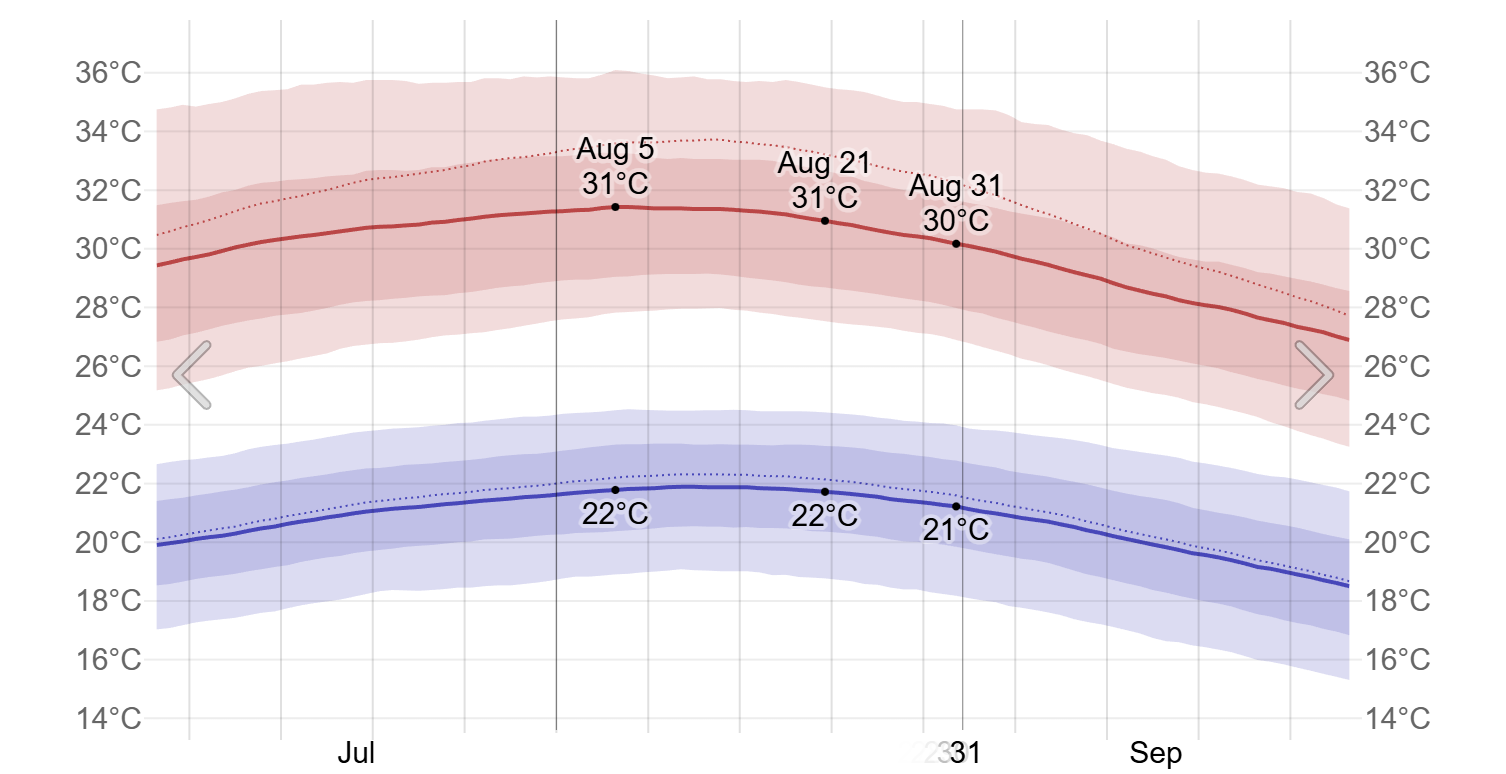
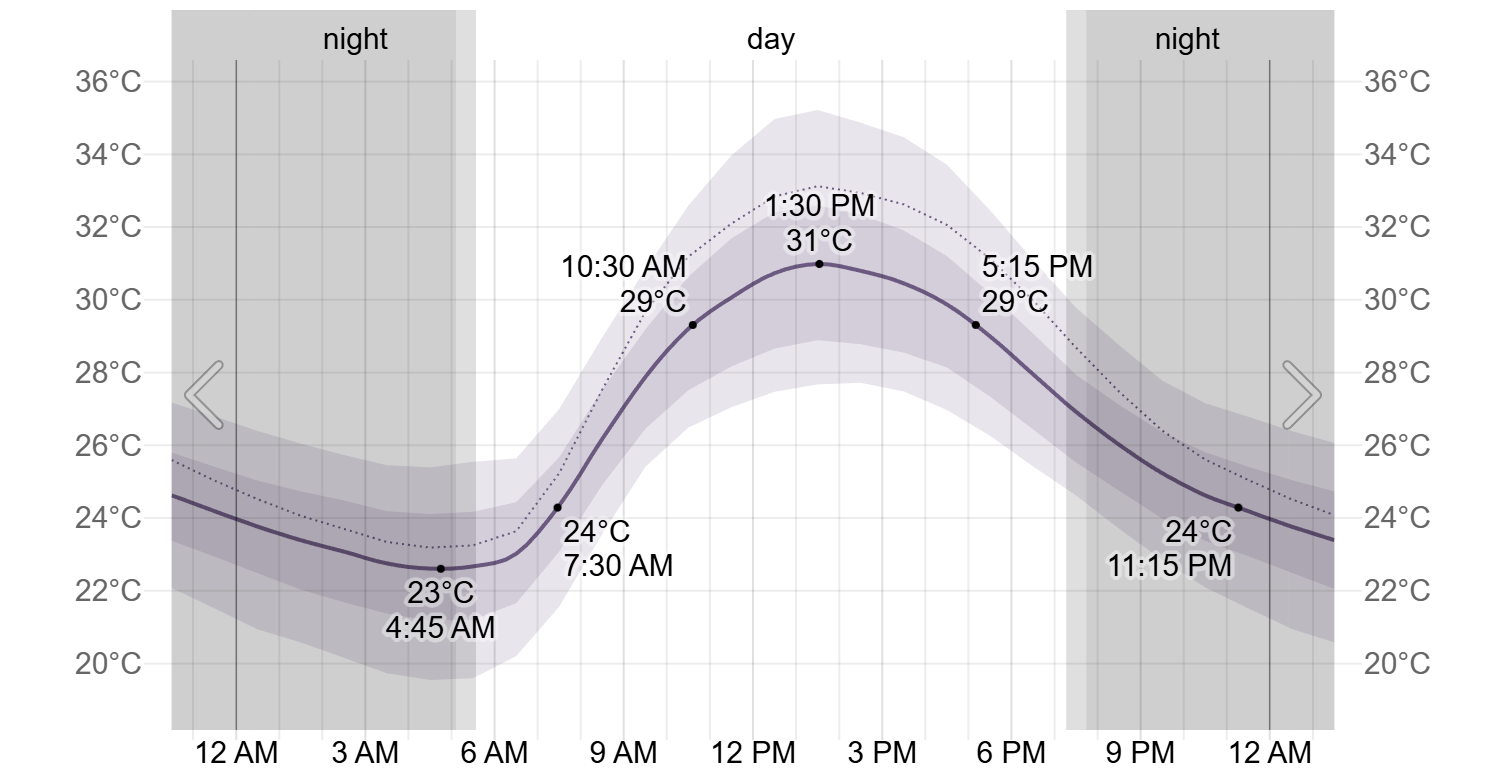
July & August are the hottest months in Tunisia. In desert areas, the temperature changes from around 30 degrees Celsius to over 45 degrees Celsius during the day. Further north, the climate is Mediterranean, with hot days and tropical nights. The mildest areas are located along norther coast. It’s the best from our observation point, planned on the northern coast between Bizerte and Tabarka, where the solar eclipse’s impact on civil twilight will be greatest. In the charts below, you can learn about the expected temperature around our observation area.
/LUGGAGE/
In the case of bag theft, you always need to fill out the Property Irregularity Report (PIR), where you need to provide detailed information about your bag, its contents, and your contact details. You will receive a 10-character reference number (e.g., TUNTS12345). Keep this safe, as it’s required to track your bag online. When your bag is missing after the flight, you have certain rights to discover why your bag is delayed or missing under the Montreal Convention, and claim the compensation later on.
/STATE OF EMERGENCY/
The state of emergency was introduced after the terrorist attacks in 2015. Security forces are visibly present in many parts of the country, including at entry points to some towns and cities. On January 30, 2026, Tunisian President Kais Saied extended a long-running state of emergency by 11 months until December 31, 2026. Despite some improvements in border security, there remains continuing instability and violence on the border with Libya. Tunisian security forces have been the primary target in terrorist-related incidents, mainly in border areas, including the Chaambi Mountains. The map below presents the current situation in the country.
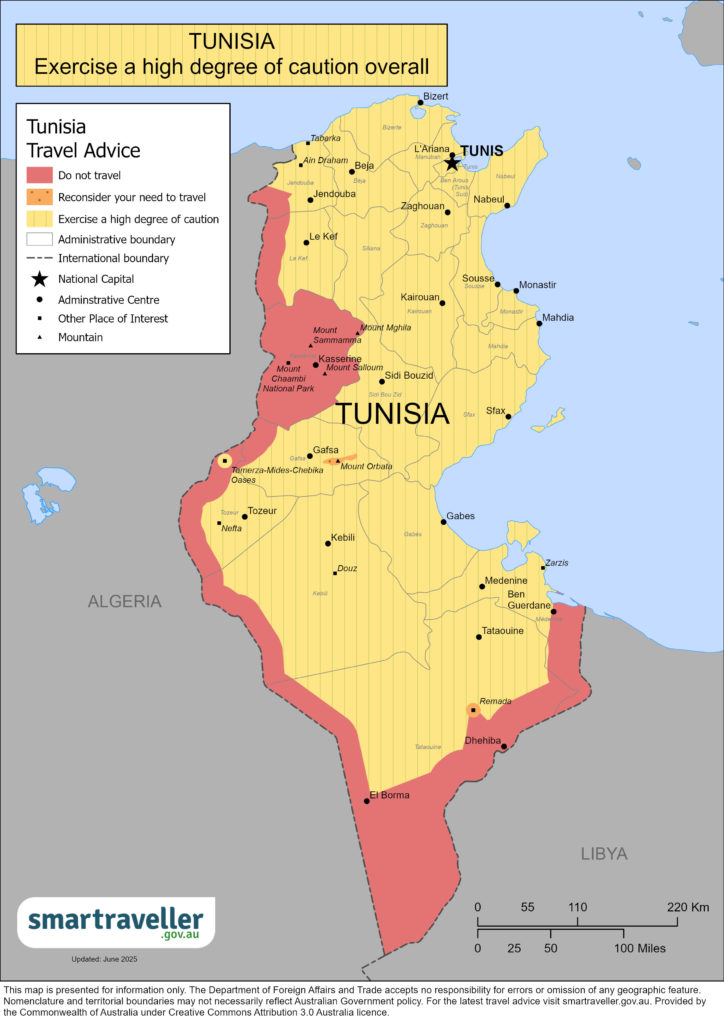
In general, it’s highly advisable not to travel into the Tunisian border areas and mountainous regions due to counterterrorism operations. There are other regions where the journey should be reconsidered. The rest of the country falls under a high degree of caution, which means:
-> Terrorist risk — Terrorist groups may target tourist locations, including hotels, resorts, museums, religious places, public transport and restaurants, often with little or no warning.
-> Civil unrest — occurs throughout the country with little notice and has the potential to turn violent.
-> Road checkpoints — by the national guard or police in order to verify personal details and background
-> General instability — which leads to deterioration of safety, thefts, criminal battery, etc.
This advisory indicates that while travel is not entirely prohibited, visitors should monitor local media, avoid demonstrations, and remain aware of their surroundings, particularly at tourist sites, as attacks can occur with little warning.
Do not take pictures of government buildings, hotels, military facilities and strategic objects!
/OTHERS/
-> Money — Since credit cards are widely accepted at hotels, upscale restaurants, and tourist attractions, it’s better to have cash for small shops, taxis, and local markets (souks). Most businesses, restaurants and retailers accept debit cards, Visa, and MasterCard. When you lose your card, you have to restrict it ASAP!
-> 1 TND = 0,35 USD (3.02.2026). Check real-time rates.
-> Emergency numbers in Tunisia: Ambulance 190, Fire & car accidents 198, Police (urban areas) 197, National Guard (rural areas) 193. French language preferably.
Power sockets in Tunisia use E and C (Europlug). The supply voltage is 230V.
-> Best mobile operators in Tunisia are Ooredoo and Tunisie Telecom, which offer the most extensive 4G coverage.